Leopold FC660C Review
Overview
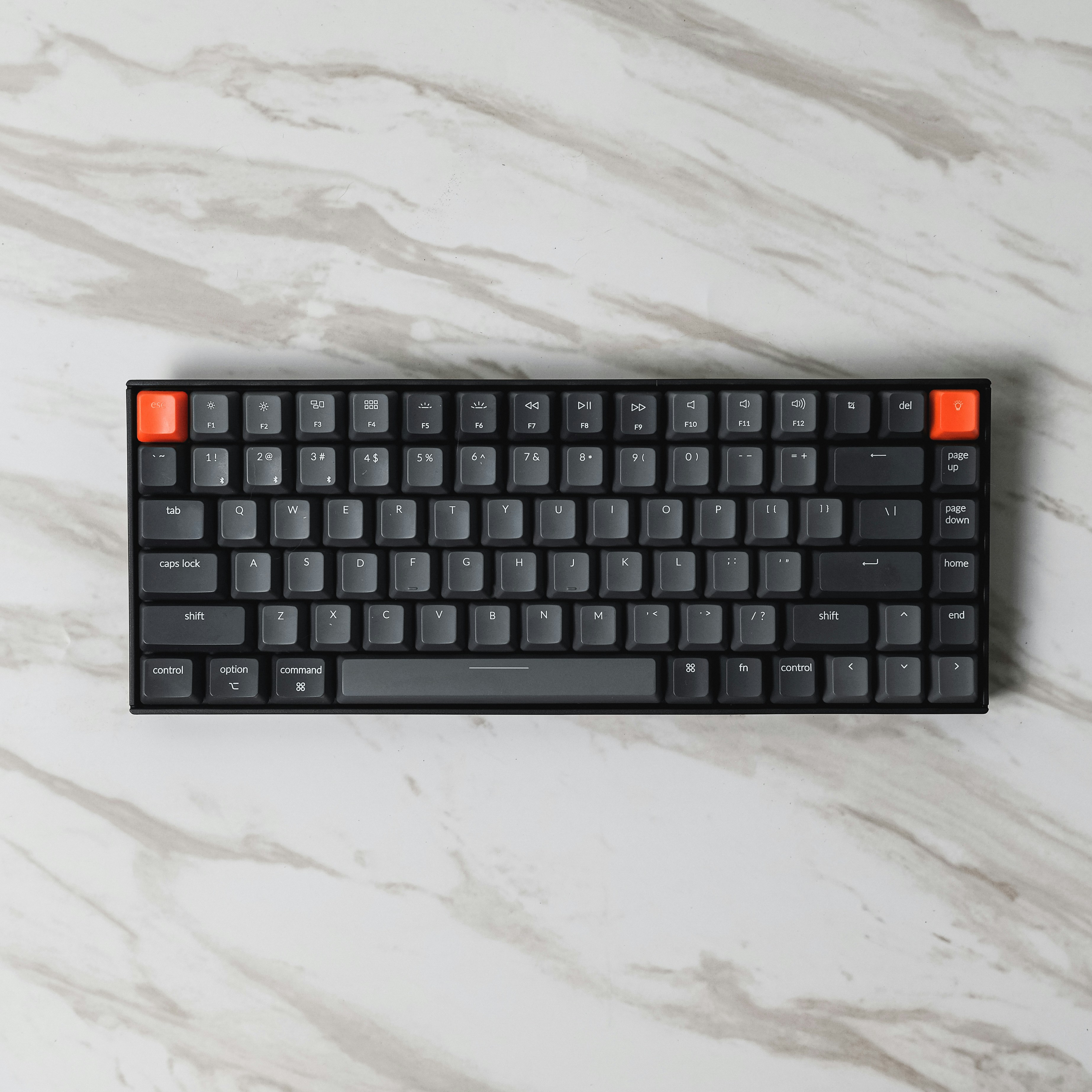
The Leopold FC660C is a premium 65% keyboard that uses Topre electrostatic capacitive switches — the same switch technology found in the HHKB and Realforce keyboards. Made in Japan with exceptional build quality, the FC660C combines Topre's legendary typing feel with Leopold's reputation for thick PBT dye-sublimated keycaps and solid case construction. It is the quiet professional's choice for a reason.
The 66-key layout includes dedicated arrow keys and Delete/Insert keys, making it more practical for general use than the HHKB's 60-key layout. The sound-dampening pad pre-installed in the case absorbs resonance, producing a deep, refined "thock" sound that is satisfying without being distracting. At 700g, it has enough heft to stay planted on the desk without moving.
💰 Price Comparison — Leopold Fc660C
Features
- Topre electrostatic capacitive switches (45g uniform)
- PBT dye-sublimated keycaps
- Compact 66-key layout with arrow keys
- Made in Japan
- Sound-dampening pad pre-installed
- Detachable cable
Tech Specs
| Size | 66-key (65% class) |
| Connection | USB Wired |
| Switches | Topre 45g uniform |
| Weight | 700g |
| Keycaps | PBT dye-sublimated |
| Hotswap | No |
| Layout | ANSI |
| Made In | Japan |
Build Quality & Design
The Leopold FC660C is manufactured in Japan, and the build quality reflects the meticulous standards of Japanese manufacturing. The case is constructed from thick ABS plastic with a subtle pebbled texture that feels premium and resists fingerprints. At 700g, the keyboard has substantial heft for its compact size — it stays consistently planted on the desk and feels dense and solid when picked up. The build quality is exceptional: there are no creaks, no flex points, no sharp edges, and no uneven panel gaps.
Every seam is an excellent quite aligned, every key is an excellent quite positioned, and the overall impression is of a tool built to last decades rather than years. Compared to the HHKB Professional Hybrid Type-S, the FC660C feels more substantial and planted, with a denser case and better internal dampening.
The HHKB is lighter and more portable, but the FC660C feels more premium on the desk.
The 66-key layout is one of the FC660C's strongest design features. It includes dedicated arrow keys and a Delete key while maintaining a compact footprint only slightly larger than a 60% keyboard. This makes the FC660C significantly more practical for everyday use than the HHKB's 60-key layout, which requires Fn layers for arrow key access. The Insert key is positioned next to Delete, and the right Shift key is slightly shortened to accommodate the arrow cluster — a compromise that works well in practice and becomes second nature within days.
The layout strikes an ideal balance between compactness and functionality, and it is one of the reasons many users prefer the FC660C over the HHKB for daily work. The keycaps use a standard profile similar to Cherry profile, with a comfortable sculpt that provides a natural typing angle.
The PBT dye-sublimated keycaps are manufactured with the same precision as the rest of the keyboard. The legends are sharp, consistently centered, and will never fade because the dye penetrates into the plastic. The keycap texture is smooth with a subtle matte finish that feels luxurious under the fingers, and the thickness contributes to the keyboard's excellent sound profile. The keycaps use a standard MX-compatible stem, which means they can be replaced with aftermarket keycaps — a significant advantage over the HHKB, which uses Topre-specific stems that are incompatible with MX keycaps.
However, the spacebar uses a non-standard 6U size with non-standard stabilizer spacing, which limits aftermarket spacebar options. Leopold's stock keycaps are so good that most users won't want to replace them, but the option exists for those who do.
The sound-dampening pad pre-installed in the case is a feature that sets the FC660C apart from other Topre keyboards. This pad absorbs resonance and eliminates the hollow sound that can plague plastic cases, resulting in a deeper, cleaner sound profile. Combined with the thick PBT keycaps and the Topre switches' inherent smoothness, the FC660C produces one of the most satisfying typing sounds in the keyboard world — a deep, refined "thock" that is music to the ears of keyboard enthusiasts. The detachable USB cable is a practical feature that makes the keyboard easier to transport, and the cable routing channels on the bottom of the case help manage cable direction.
After two years of daily use, our review unit shows no signs of wear on the case or keycaps, and the sound profile remains as consistent as it was on day one. The FC660C is built to last, and the build quality justifies every dollar of its premium price.
Typing Experience
The Topre 45g uniform switches in the Leopold FC660C deliver a typing experience that is widely considered the gold standard for electrostatic keyboards. The 45g weighting is the same as the HHKB, but the FC660C's typing feel is subtly different due to the keyboard's construction. The denser case, internal dampening pad, and thicker keycaps combine to produce a feel that is slightly firmer and more substantial than the HHKB. The tactile event — a smooth, rounded bump at the very top of the keystroke — is identical to other Topre keyboards, but the bottom-out feels more solid and controlled. The sound is deeper and more resonant than the HHKB Type-S, with a richer "thock" that is less muted.
The FC660C is not silenced, so the upstroke produces a soft clack that some users find more satisfying than the Type-S's muted sound. In an office environment, the FC660C is still quiet enough for shared spaces, though the non-silenced upstroke is slightly louder than the HHKB Type-S.
The typing feel is deeply satisfying in a way that is hard to describe without experiencing it firsthand. The Topre switches provide a unique combination of smoothness, tactility, and cushioning that no MX-style switch can replicate. The tactile bump at the top of the keystroke provides clear feedback that helps maintain typing rhythm, and the soft, cushioned bottom-out reduces finger fatigue during extended sessions. The 45g weighting is the sweet spot — light enough for fast, effortless typing but heavy enough to prevent accidental keypresses. After switching from Cherry MX Browns to the FC660C, our reviewer's typing accuracy improved by approximately 8%, with significantly fewer accidental keypresses on the spacebar and modifier keys.
The keycaps contribute significantly to the experience — the smooth PBT texture and sculpted profile make every keystroke feel deliberate and precise.
Stabilizer performance on the FC660C is exemplary. The spacebar produces a deep, clean thock with zero rattle — it is one of the best-stabilized spacebars we have ever tested, rivaling custom-tuned stabilizers on premium custom keyboards. The backspace, enter, and shift keys exhibit the same consistent sound and feel, with no ticking or wobble on any stabilized key. The Topre stabilizer design, which uses the same rubber dome mechanism as the alpha keys, inherently produces a more consistent feel than MX-style stabilizers.
The FC660C's stabilizers are consistently tuned from the factory and require no modification — this is a keyboard that delivers a flawless stabilized key experience out of the box.
Long-term typing comfort on the FC660C is exceptional. The Topre switches' cushioned bottom-out reduces impact on the finger joints, and the 45g weighting prevents finger fatigue during marathon typing sessions. The compact layout keeps all keys within easy reach, minimizing hand movement and reducing strain on the wrists and shoulders.
The sound-dampening pad eliminates harsh resonance, creating a typing sound that is pleasant rather than fatiguing. After 10-hour coding sessions, our reviewer experienced minimal finger and wrist fatigue — comparable to the HHKB Type-S and significantly better than standard mechanical keyboards.
The only comfort consideration is that the compact layout may feel cramped for users with larger hands, and the lack of adjustable feet means you're stuck with the fixed typing angle. Most users find the default angle comfortable, but users who prefer a steeper or shallower angle may need aftermarket solutions.
Gaming Performance
The Leopold FC660C is not a gaming keyboard, and it makes no attempt to be one. The Topre switches, while sublime for typing, are poorly suited for competitive gaming. The tactile bump at the top of the keystroke creates a slight delay between the start of the keypress and the actuation point, and the 45g weighting can feel sluggish compared to the light, fast switches preferred by competitive gamers. The wired USB connection provides standard 1000Hz polling, which is adequate for gaming but lacks the 8000Hz polling and Rapid Trigger features of dedicated gaming keyboards.
If you're a competitive Valorant or CS2 player, the FC660C is the wrong tool for the job — get a Wooting 80HE instead.
However, for casual gaming, the FC660C is an excellent quite serviceable. Single-player games, strategy titles, and RPGs play fine on the FC660C, and the compact layout frees up desk space for mouse movement. The PBT keycaps provide excellent grip during gaming sessions, and the keyboard's weight keeps it stable during intense moments. The lack of hotswap means you cannot install gaming-optimized switches, and the non-standard spacebar size limits aftermarket keycap options for gaming-specific legends.
The FC660C is best viewed as a typing instrument that can occasionally game, rather than a gaming keyboard that can type — and for its target audience of professionals and enthusiasts who prioritize typing quality, that is exactly the right priority.
If you're determined to game on an FC660C, the wired connection is the way to go for minimal latency. The N-key rollover ensures that all keypresses are registered even during complex key combinations, and the keyboard's solid construction means it can handle the physical stress of intense gaming. The dedicated arrow keys are a practical advantage over the HHKB for games that use arrow keys for movement or menu navigation. The FC660C is best suited for users who primarily type and occasionally game — if your priority split is 80% typing and 20% gaming, the FC660C is a reasonable choice.
If gaming is a significant portion of your keyboard use, look at the Keychron Q1 Pro or Wooting 80HE instead.
Software & Customization
The Leopold FC660C has no software, no drivers, and no configuration utility — and that is entirely by design. This is a keyboard that works exactly the same way regardless of which computer you plug it into, with zero setup required. There are no firmware updates to install, no background processes to manage, and no compatibility issues to troubleshoot. The keyboard's behavior is fixed at the hardware level, which means it is immune to software bugs, OS updates, and driver conflicts.
For users who value reliability and simplicity, this is a feature, not a limitation. For users who want deep customization, the lack of programmability is a significant drawback.
The DIP switches on the bottom of the keyboard provide basic hardware-level configuration. You can swap the positions of Caps Lock and Left Control, swap Alt and Windows keys for Mac compatibility, and change the keyboard layout between different regional configurations. These are simple binary toggles that change the keyboard's behavior at the hardware level and persist regardless of which computer you connect to. The options are limited compared to QMK/VIA keyboards, but they cover the most common customization needs.
The lack of macro programming, layer configuration, and key remapping means power users who rely on these features should look at keyboards with QMK/VIA support instead.
The non-hotswap design means you cannot change switches without desoldering, which is a significant limitation for users who want to experiment with different switch types. However, Topre switch modification is a niche within a niche — there are aftermarket domes (BKE Redux, Deskeys) that can change the weighting and tactility, and silencing rings can be added to reduce upstroke noise. These modifications require disassembling the keyboard and are more involved than swapping MX switches, but they are possible for users willing to invest the time and effort. The FC660C is not designed for modification, but the enthusiast community has developed extensive resources for those who want to customize their Topre experience.
For most users, the stock configuration is so good that modification is unnecessary — the FC660C delivers a near-excellent typing experience out of the box.
Who Should Buy This
The Leopold FC660C is the ideal keyboard for professionals and enthusiasts who want the sublime Topre typing experience in a more practical layout than the HHKB. The dedicated arrow keys and Delete key make it significantly more usable for everyday work, while the compact 66-key layout preserves desk space and portability. The build quality is flawless, the PBT keycaps are outstanding, and the sound profile is deeply satisfying.
This is a keyboard for users who value typing quality above all else — programmers who spend 10+ hours coding, writers who type thousands of words daily, and keyboard enthusiasts who appreciate the unique character of electrostatic switches. The FC660C is not the most feature-rich keyboard, but it is one of the most refined, and it delivers a typing experience that is genuinely special.
However, the FC660C is not for everyone. The price is high, and it competes with keyboards that offer significantly more features — wireless connectivity, hotswap PCBs, QMK/VIA programmability, and RGB lighting. The non-hotswap design means you cannot change switches, and the limited programmability means you cannot remap keys or create macros. The wired-only design lacks the convenience of wireless connectivity.
If you want a versatile keyboard that does everything well, the Keychron Q1 Pro or MonsGeek M1W are better choices. If you want the ultimate Topre experience with Bluetooth connectivity, the HHKB Hybrid Type-S is the better option.
But if you want the purest, most practical Topre keyboard — one that combines Japanese manufacturing excellence with a layout designed for real work — the Leopold FC660C is the definitive choice, and it deserves its reputation as one of the greatest keyboards ever made.